الثلاثاء، 5 أغسطس 2014

meothelioma 21st Century Fox withdraws bid for Time Warner

Rupert Murdoch's 21st Century Fox has withdrawn its bid to purchase US entertainment giant Time Warner for an estimated $80bn (£47bn).
Time Warner rejected Fox's initial offer in July.
The company wrote in a statement that Time Warner had "refused to engage with us to explore an offer which was highly compelling".
It added that the reaction in the company's share price since the proposal was unveiled undervalued Fox.

Twenty-First Century Fox Inc Class B

Last Updated at 05 Aug 2014, 20:12 GMT Twenty-First Century Fox Inc Class B one month chart
price change %
31.03 -
-0.84
-
-2.64
Fox's share price has declined by 11% since news of the takeover was revealed.
Meanwhile shares in Time Warner plunged more than 11% in after-hours trading after the surprise news of the withdrawal was announced.
Altered landscape
A merger between the two giants would have significantly altered the media industry in the US and created one of the world's largest media conglomerates.
Time Warner owns several lucrative cable channels - including HBO, TNT, and TBS - whereas Fox is the owner of the dominant Fox News channel in the US.
The acquisition offer was seen as a way for Fox to stay competitive as other big players in the industry, including Comcast and AT&T, also engage in mergers and take over offers.
As part of the announcement, Fox also said it would authorise a $6bn share repurchase programme.
That pleased investors, who sent shares in the firm up over 7% in trading after markets were closed.

More on This Story

From other news sites


meothelioma Afghan soldier attack on UK army camp kills US general

A US major-general has been killed in an attack by a man in Afghan military uniform at a British-run military academy near Kabul, US officials say.
Two British soldiers were among the wounded, along with several Americans, a German general and an Afghan general.
Afghanistan's Ministry of Defence said the Afghan soldier who opened fire was shot dead.
The US major-general is the most senior international soldier killed since the fall of the Taliban in 2001.
He has been identified as Major-General Harold Greene, US media reported.
He was the deputy commanding general for the Combined Security Transition Command, involved in preparations for the withdrawal of US coalition troops at the end of the year, says the Associated Press.
The BBC understands the shooting at Camp Qargha happened after a dispute broke out.
The attacker was a soldier who was recruited three years ago, Afghan defence ministry sources told the BBC.
Afghan 'Sandhurst'
The incident is said to have occurred late morning or lunchtime after an argument between Afghans and an armed Afghan soldier.
The BBC's David Loyn says the Afghan Ministry of Defence has confirmed that several foreign soldiers have been injured
The Afghan soldier opened fire from a guard post at a large group of senior Afghan and international troops.
By the time he had emptied the magazine of his US-issue M16 rifle, more than a dozen people had been shot, our correspondent says.
Major-General Harold Greene is the most senior US soldier to die in combat since the Vietnam War.
The Afghan commander of the British-led officers' academy, General Gulam Sakhi, was among those wounded.
The training academy is modelled on UK military academy Sandhurst and will be the only British military presence in Afghanistan when operations end this year.

meothelioma Gaza conflict: Kerry urges broader Israel-Palestinian talks

US Secretary of State John Kerry, speaking to BBC HARDtalk: "There has to be a giving on both sides"
US Secretary of State John Kerry has urged Israel and the Palestinians to take advantage of the Gaza truce to move towards broader negotiations.
Mr Kerry told the BBC the situation could concentrate minds on the need to negotiate a "two-state solution".
A 72-hour humanitarian truce is holding in Gaza, halting a four-week conflict that has claimed more than 1,900 lives.
Israel and the Palestinians have sent delegations to Cairo to discuss the possibility of a longer-term truce.
'Greater responsibility'
Mr Kerry, in an interview with Zeinab Badawi for BBC HARDtalk, said the US fully supported Israel's right to defend itself against militant rocket attacks.
Jon Donnison reports from Gaza on the destruction left after the conflict
A humanitarian truce is holding in Gaza - James Robbins looks at whether it represents a victory for Israeli tactics
"No country can live with that condition and the United States stands squarely behind Israel's right to defend itself in those circumstances. Period."
He said that Hamas, which controls Gaza, had "behaved in an unbelievably shocking manner engaging in this activity and, yes, there has been horrible collateral damage as a result".

insurance Double-decker buses collide in New York City's Times Square

At least 13 people were injured when two tourist buses collided in the heart of New York City's Times Square on Tuesday.
Three of the injuries were serious, but not life-threatening. Victims were taken to area emergency rooms, according to ABC7.
Eight pedestrians were hurt, in addition to three people riding the tour buses -- a red Greyline bus and a blue City Sights bus, according to NBC News.
The crash occurred near the TKTS booth, where theatergoers purchase discount Broadway tickets.  A traffic signal was knocked over in the collision, DNA Info New York reports.
Orville Anderson told the New York Times:
“All of sudden we heard this big boom,” he said. “I saw the lightpole coming over and fall down. I looked over and we saw people laying on the ground. It was scary.”

insurance Afghan soldier kills US general, wounds about 15


KABUL, Afghanistan (AP) — A U.S. official has identified the senior officer killed in Afghanistan Tuesday as Maj. Gen. Harold Greene, the highest-ranking American officer killed in combat since 1970.
Greene was the deputy commanding general, Combined Security Transition Command-Afghanistan. An engineer by training, Greene was involved in preparing Afghan forces for the time when U.S.-coalition troops leave at the end of this year.
Greene was killed Tuesday in one of the bloodiest insider attacks of the long Afghanistan war when a gunman dressed as an Afghan soldier turned on allied troops, wounding about 15 U.S. and coalition forces. They included a German general and two Afghan generals

Insurance

RAYMONDVILLE, Texas -- Two illegal immigrants from Mexico who were charged with first-degree murder in the shooting death of an off-duty U.S. Border Patrol agent in front of his family in Texas have been arrested and deported numerous times, police sources told FoxNews.com.
One suspect has been arrested no fewer than four times for entering the U.S. illegally, according to federal court records. The other has been deported twice after entering the U.S. illegally, sources said.
Gustavo Tijerina, 30, and Ismael Hernandez, 40, were arraigned Tuesday afternoon inside the Willacy County jail library. They were ordered held without bail after being charged with capital murder of a peace officer, attempted murder, and a variety of lesser charges.
The pair, who have been living in Texas illegally, confessed after being interviewed multiple times Monday to killing Border Patrol agent Javier Vega Jr. in front of his wife and two kids and his parents Sunday night while they were fishing in Santa Monica, Sheriff Larry Spence told FoxNews.com.
They finally confessed to the robbery and indicated they knew they had killed someone, but did not know it was an off-duty Border Patrol agent, Spence said in an interview in his office Tuesday morning.
"They do now," he said.
When asked how the suspects reacted when they learned the victim was a Border Patrol agent, Spence said, "shock and concern."
The sheriff said the two suspects were likely connected to cartels or other criminal gangs.
"They claim to have been involved in other incidents, this means you've got stolen vehicles going into Mexico," he said.
"Everything is going to be cartel-related, there's a connection somehow.
"This is not the first episode of border violence in Willacy County but it's the first time someone's been killed," he said.
Tijerina, who according to records was arrested at least four times between 2007 and 2010 for entering the U.S. illegally, and Hernandez allegedly approached Vega and his family and tried to rob them on Sunday night. When Vega pulled out his weapon, the suspects allegedly shot him in the chest, killing him.Vega's father was shot in the hip and is recovering at a nearby hospital.
According to court records, Tijerina, who also goes by the name Tijerina-Sandoval, pleaded guilty to entering the U.S. illegally on July 9, 2007. He was given a 30-day sentence with credit for time served and charged a $10 fee.  
Three months later, on Oct. 4, he was again found guilty of entering the country illegally and was sentenced to 60 days in jail and $10 fee. In a criminal complaint, he said he entered the U.S. on Sept. 1 and was encountered by border patrol agents near Weslaco, Texas, on Oct. 3. He had waded across the Rio Grande River near Progreso, Mexico, court records show.
A year later, on Oct. 25, 2008, he again crossed into the U.S. by wading across the river. On Nov. 18, 2008, he was given 90 days in jail and another $10 special assessment fee.
On Dec. 15, 2009, Tijerina was indicted by a grand jury on charges of entering the U.S. illegally yet again. The indictment says he "had previously been denied admission, excluded, deported and removed, knowing and unlawfully was present in the United States having been found near Edinburg, Texas." Court records say he had not obtained consent from the U.S. attorney general and the secretary of homeland security to reapply for admission into the U.S.
A warrant issued for his arrest said he faced up to 20 years in prison and a fine of up to $250,000.
He was held without bond on Jan. 26, 2010. He was given nine months in jail and fined $100.
Sources confirmed that these court cases involved the same Tijerina in custody for killing the Border Patrol agent. They said Hernandez, the other suspect, has been deported twice for entering the U.S. illegally.
Both Tijerina and Hernandez were arraigned on seven charges: capital murder of a peace officer, attempted murder, four counts each of aggravated robbery and one count of tampering with evidence. When asked by the judge if they wanted to notify the Mexican Consulate and if they wanted attorneys, both said yes. Each also wanted to be allowed to call family members.
At 12:45pm, the first suspect, Tijerina, appeared before Judge George Solis. He wore an orange short-sleeve shirt and pants and black flip flops with silver chains around his ankles. His blood-shot eyes bulged in apparent surprise when the judge told him he faced seven different counts.
Tijerina at several points during his arraignment looked around the room and stared at each person, including this reporter and two others, and the county sheriff.
When the charges were being read, Tejerina interrupted to say there was no robbery. Sources told FoxNews.com Tejerina is the one believed to allegedly have fired the shots that killed Vega.
As he was being walked out, he asked if he could have a Bible from the library shelf. He was told he would be brought one later in his cell.
After Tijerina had been escorted out of the small room, Hernandez, thin and lanky and wearing dark green prison garb, was brought in about 1:10pm. He was more vocal than the first suspect. When told of the seven charges he was facing, Hernandez exclaimed "seven charges?" in Spanish.
"I don't understand why I'm being accused of so many things," he told the judge.
Hernandez said he tested negative for gunshot powder. Sources said this suspect’s job in the robbery-turned-murder was to drive the car they planned to steal.
Hernandez said he wanted to tell his wife and his brothers "who live here" what had happened.
"I wish I could let my wife know and my brothers, the ones who are here," he said.
When he was told a lawyer would be provided if he couldn't afford one, Hernandez said, "Yo no tengo deniro. No tengo nada." ("I don't have money, I don't have anything.")

الاثنين، 4 أغسطس 2014

The Pope's 10 tips for happiness


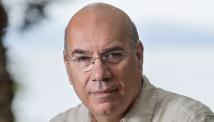
Editor's note: Jay Parini, a poet and novelist, teaches at Middlebury College in Vermont. He has just published "Jesus: The Human Face of God," a biography of Jesus. Follow him on Twitter@JayParini. The opinions expressed in this commentary are solely those of the author.
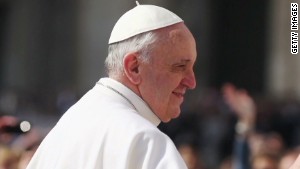
(CNN) -- Just when I thought my amazement with Pope Francis had run its course, he did it again. In a long interview with an old friend who was writing for an Argentine magazine, the pope put forward a 10-point plan for happiness. From where I sit, it seems, well, pretty damn good if not perfect. Here are Pope Francis' tips for a happy life and my comments on them:
1. Live and let live. It's an echo of the Pope's earlier remark on gays: "Who am I to judge?" Moreover, it's what Jesus said in the Sermon on the Mount: "Judge not, unless you want to be judged yourself." (Matthew 7:1)
Jay Parini
Jay Parini
2. Give yourself to others. That is, give your money and your time to those in need. Don't just sit around like stagnant water. Give all you have and then some.
3 Move quietly in the world. The Pope quotes from a favorite novel by an early 20th-century Argentine writer, Ricardo Guiraldes, in which the novelist writes that in one's youth, a person is "a rocky stream that runs over everything," but as one gets older, one becomes "a running river, quietly peaceful." It's very like the Native American suggestion that one should walk "in balance and beauty" on the ground, making the least disturbance.
4. Enjoy leisure. The Pope says that consumerism has brought with it unbearable anxieties. So play with your children. Take time off. And don't spend all your time thinking about your next acquisition. Spend your time well, not your money.
5. Sunday is for families. This is actually one of the Ten Commandments. Honor the Sabbath. (Exodus 20:8) Once a week, give a whole day to meditation, worship, family life, tending the needs of the spirit. This is healthy living.
6. Find jobs for young people. Who would have guessed that job-creation would be on list for happiness? But the Pope is right. Honest, simple work for young people is essential to their well-being. Somewhat surprisingly, in this moment in the interview, the Pope connected job creation to the degradation of our environment: "the tyrannical use of nature." He links the lack of good jobs to the lack of respect for ourselves and the Earth itself.
So creating jobs doesn't mean ruining the environment. It doesn't mean, as the politicians chant, "jobs, jobs, jobs." Good and productive labor is valuable, and it doesn't mean you have to have a fancy job description. You don't have to become rich. You can be ordinary. Happiness lies there. Do good work, create good work for others.
Writer: 'What would Jesus do in Gaza?'
Pope Francis to visit U.S. in 2015
Pope meets death sentence Christian
7. Respect nature. This follows from No. 6. "Isn't humanity committing suicide with this indiscriminate and tyrannical use of nature?" the Pope wonders. Not surprisingly, this is what Henry David Thoreau, a founding father of the environmental movement, said. "Most people live lives of quiet desperation," he said. He went into the woods, to Walden Pond, because he wanted "to live deliberately" and to "front only the essential facts of life."
A proper respect for nature means that you can't pollute the air, poison the rivers and chop down the forests indiscriminately without suffering greatly. I suspect that a huge amount of the anxiety and suffering that we see around can be closely traced to our wanton misuse of our resources. Just look at any garbage dump and see what is wasted. In a sense, we've wasted our souls.
8. Let go of negative things quickly. The Pope tells us not to complain about people who annoy or frustrate us, to let go of things as rapidly as we can. I have an old friend who used to say, "Put the bad things in your back pocket and leave them there." This may sound like escapism or putting your head in the sand, but it's more interesting than that. Life throws rotten things our way each day. People say nasty things to us, often about others. This stuff makes them miserable, of course. It makes us miserable, too. Flush it.
9. Don't preach your religion too forcefully. Proselytism brings on paralysis, the Pope tells us. Wow. I'm a Christian myself, and I don't mind saying so. But each person sees the world before them in his or her own way. The Pope says this. As a teaching, it seems to run counter to the so-called Great Commission (Matthew 28:16-20). Jesus said to get out there and spread the word. But the Pope takes a relaxed view of this activity, preferring that we should teach by example. Perhaps that really is what Jesus would do?
10. Work for peace. The Pope has preached this message from the beginning of his time as pontiff. He has gone to Jerusalem and worked to bring together Jews and Palestinians. He has prayed for peace and worked for peace. He has listened closely to Jesus, who said, "blessed are the peacemakers."
The Pope asks us to take in refugees, to think innovatively about how to create peace in the world. Jesus, of course, invites us to turn the other cheek when struck. This is a complex teaching. But it's essential to Christian faith. The Pope, once again, calls on us to take the teachings of the Sermon on the Mount seriously. This is very hard but crucial work.
Pope Francis has, in this unlikely venue, given us his own Sermon on the Mount, his Ten Commandments for happiness and inner peace. One can only be grateful for his wisdom, which is rooted in a sincere faith, in hard-earned wisdom, and a very practical knowledge of human needs and potentials.

World leaders at WW1 centenary events in UK and Belgium

Royals and world leaders have gathered for ceremonies marking 100 years since Britain joined World War One.
The Duke and Duchess of Cambridge, Prince Harry and David Cameron attended a twilight ceremony at St Symphorien Military Cemetery near Mons, Belgium.
The Prince of Wales and the UK prime minister were at a Glasgow service, and many heads of state were in Belgium.
The day concludes with a candle-lit vigil at Westminster Abbey and a "lights out" event around the UK.
'Deadly days'
The public can join the hour-long switch-off which ends at 23:00 - the time Britain declared war on Germany in 1914.
Some of the highlights of WW1 centenary events in the UK, Belgium and Singapore
About 17 million soldiers and civilians were killed between 1914 and 1918.
The day's events began in Liege where 50 heads of state gathered for a service to mark the invasion of Belgium.
French President Francois Hollande said the country had been the first battleground of WW1 and had offered "solid resistance" in Liege.
"Deadly days" followed when French and British soldiers joined the conflict, he said.
Last Post being played at St Symphorien Military Cemetery
The Last Post was played at St Symphorien Military Cemetery near Mons
Prince William
Prince William said European countries which had fought bloody wars were now "friends and allies"
Prince Charles, David Cameron and others at Glasgow Cathedral
David Cameron gave a Bible reading at Glasgow Cathedral earlier in a service attended by Prince Charles
Memorial arch in Folkestone
Prince Harry attended the unveiling of a memorial arch in Folkestone
Grave of John Parr
A white rose was laid at the Mons grave of the first British soldier to die in western Europe, John Parr
Speaking to the gathered European leaders, Prince William said: "We were enemies more than once in the last century and today we are friends and allies.
"We salute those who died to give us our freedom. We will remember them."

Gaza conflict: Israel and Palestinians 'agree ceasefire'

Israel and Palestinian groups have agreed to a 72-hour humanitarian truce in Gaza, officials say.
The ceasefire will start at 08:00 local time (05:00 GMT) on Tuesday.
Israel held its own seven-hour "humanitarian window" in Gaza on Monday but then resumed its military operations.
Health officials in Gaza say more than 1,800 Palestinians have been killed in the four-week conflict, which has also claimed 67 Israeli lives.
A Thai national working in Israel was also killed.
'Without preconditions'
There have been several truces called during the conflict but none has lasted, with each side accusing the other of violations.
The latest was discussed on Monday by various Palestinian groups in Cairo, although Israel did not attend.
However, a senior Israeli official later told the BBC: "Israel will accept the draft of the Egyptian proposal for an unconditional ceasefire, without preconditions and for 72 hours, starting tomorrow at 08:00."
Azzam al-Ahmed, leader of the Palestinian delegation, said: "The Palestinians have agreed to a ceasefire proposed by Egypt."
Egypt negotiated a similar truce earlier in the conflict that was accepted by Israel but rejected by Hamas, which controls Gaza.
The new agreement proposes that delegations from all sides then attend further talks in Cairo.
The main Palestinian demands remain on the table, notably a full Israeli troop withdrawal from Gaza, the end of the blockade of the territory and the opening of border crossings.
Israeli PM Benjamin Netanyahu said again on Monday that Israel's main goal was to "return quiet and security to the citizens of Israel".
Speaking after the seven-hour truce ended, he also said that the military operation would not end until all tunnels used by militants to infiltrate Israel were destroyed.

Whale of a catch! Massive whale shark snared by Chinese fishermen


Talk about the catch of the day.
A Chinese fisherman caught a massive whale shark in the waters off Fujian province over the weekend. Photos of the estimated 14-and-a-half-foot, 2-ton fish being transported to market through the streets of Xiaozhi have caused a bit of a stir in China, where the whale shark is endangered — and illegal to catch and sell.
But according to local media reports, Capt. Cai Chengzhu claims his fresh catch was an accident — and that the giant shark became stuck in his net and died while the crew was trying to release it.
“It's believed that the giant creature broke the net and got inside to eat the fish we caught," Chengzhu told local media, according to the Shanghaiist.
Chengzhu said he was hoping to get between 10,000 and 20,000 yuan for his fishy freight before he was stopped by Fujian fishery officials, the Independent reports.
"It was really unfortunate and we did our best to free it," he said, according to the Daily Mail. "But having caught it and because it was already dead, it seemed a shame to waste it."
Some critics quickly cast doubt on Chengzhu's fish tale. Whale sharks are known as filter feeders and would not normally wouldn’t break into a fisherman’s net to eat fish.
The whale shark (or Rhincodon typus) was first discovered in South Africa in 1829. It is the largest known extant fish species and can get as long as 30 feet — twice as big as the one Chengzhu snared — and can live up to 100 years.

Rand Paul says he never proposed ending aid to Israel — even though he did

Kentucky Sen. Rand Paul on Monday denied that he once supported ending federal aid to Israel—an idea he proposed as recently as 2011.

In 2011, the newly-elected Paul proposed a budget that would have cut $500 billion from the federal budget in part by cutting off foreign aid to all countries, including financial grants to Israel. The United States provides about $3 billion to Israel annually, and last week the Senate approved $225 million to help support Israel’s “Iron Dome” technology that blocks rocket fire from Gaza. (Paul supported the measure.)Paul, who was in Omaha campaigning for Nebraska Senate candidate Ben Sasse before a three-day tour of neighboring Iowa, may not like it when reporters bring up his proposal from three years ago to end all U.S. foreign aid—including to Israel. But that was in fact his position.
Paul, in his first months in office, however, defended phasing out aid by saying that the U.S. could no longer afford giving cash to other countries.
“I’m not singling out Israel. I support Israel. I want to be known as a friend of Israel, but not with money you don’t have,” Paul said in 2011 during an interview with ABC News. “We can’t just borrow from our kids’ future and give it to countries, even if they are our friends.”
He even pointed to Israel as an example of a nation that doesn’t need foreign aid because of its own wealth.
“I think they’re an important ally, but I also think that their per capita income is greater than probably three-fourths of the rest of the world,” Paul said, also in 2011. “Should we be giving free money or welfare to a wealthy nation? I don’t think so.”
Paul, a possible 2016 presidential contender whom some in the GOP regard as insufficiently pro-Israel, has recently changed his tune on foreign aid to the Jewish state. His budget proposals since 2001 have included aid to Israel.
It’s one thing for a politician to admit that his views have changed on an issue; and an entirely other thing to say that they never held the position at all.
This article has been updated.

الأحد، 3 أغسطس 2014

Gaza crisis: Deadly strike 'on UN school in Rafah'

At least 10 people have been killed in a strike on a UN-run school housing Palestinians displaced by the Gaza conflict, medics say.
Thousands of Palestinians were believed to be sheltering in the facility in Rafah in the southern Gaza Strip.
The Israeli military has not commented but has been carrying out renewed strikes in Gaza.
Gaza health officials say 30 people have died on Sunday, while militants continue to fire rockets into Israel.
The latest exchanges came after Israel's military said that an officer it feared had been captured had now been confirmed dead. Hadar Goldin went missing on Friday near Rafah.
Confirmation of 2nd Lt Goldin's death means 66 Israelis have now died in the fighting, all but two of them soldiers. A Thai worker in Israel also died.
"On the brink of collapse": Chris Gunness from the United Nations talks to the BBC
The latest official figures from Gaza's health ministry say that 1,740 Palestinians have been killed and 9,080 injured since the conflict began more than three weeks ago.
The UN warned that a "health disaster of widespread proportions" is unfolding in Gaza, with medical services facing collapse.
Forces redeployed
The Israeli shelling of the Jabaliya UN shelter last week, which killed 16 people, drew widespread international condemnation.
In the latest attack, eyewitnesses said a missile struck near the entrance to the school.
Israelis grieve for Hadar Goldin, who went missing after clashes in southern Gaza
At least 30 people were also injured, Palestinian officials said.
On Sunday, Israel said its forces were withdrawing from some areas of Gaza to a "temporary security strip" to reassess operations.
Reports said the military was close to completing its main aim of destroying tunnels used by militants to infiltrate Israel.
Israel Defense Forces spokesman Lt Col Peter Lerner told Agence France-Presse: "We are redeploying within the Gaza Strip and taking out other different positions... so it won't be the same type of ground operation... It's changing gear but it's still ongoing."
Tanks on Gaza border, 2 Aug
Israel has vowed to continue its Gaza operations until security is restored
However, Prime Minister Benjamin Netanyahu has warned Israel will continue its offensive.
"Hamas again mistakenly believes that the people of Israel do not have the will and determination to fight them and Hamas again will learn the hard way that Israel will do whatever it must do to protect its people," he said.
Hamas spokesman Fawzi Barhoum dismissed Mr Netanyahu's comments as "confused" and said the group would "continue to resist until we achieve our goals".
A delegation from Hamas, which controls Gaza, and Islamic Jihad arrived in Cairo on Sunday for talks with Egyptian and US officials over a possible truce.
A boy wounded in a separate attack in Rafah is taken for treatment, 3 Aug
A boy wounded in a separate attack in Rafah on Sunday is taken for treatment
Sister Ayelet and fiancee Edna of Lt Hadar Goldin attend a news conference after his death was confirmed, 2 Aug
Sister Ayelet and fiancee Edna of Lt Hadar Goldin attend a news conference after his death was confirmed
Hamas is demanding the removal of Israeli troops and the ending of an economic blockade.
However, Israel has said it will not attend the talks.
Israeli Justice Minister Tzipi Livni told the Ynet website: "You want to talk about lifting the blockade? Not with us, and not now."
Funeral
Chris Gunness, from the United Nations Relief and Works Agency (Unrwa), told the BBC that a "health disaster of widespread proportions is rapidly unfolding in Gaza, with medical services on the verge of collapse".
He said: "Critical supplies of medicines and disposables are almost depleted and the damage and destruction of power supplies has left hospitals dependent on unreliable generators."
Mr Gunness warned that there was a serious risk of an outbreak of waterborne and communicable diseases because of a lack of adequate water and poor sanitation.
Separately overnight, Israel said DNA evidence confirmed that Lt Goldin had died.
Israel's defence minister and the chief military rabbi met the soldier's family at their home in the town of Kfar Saba on Saturday night.
Hundreds of well-wishers had gathered outside their home and there was an outpouring of grief when the military's announcement was made public.
The funeral is expected to take place in Kfar Saba on Sunday afternoon.
Map
Are you in Gaza or Israel? Have you been affected by the violence? You can send us your views and experiences by emailing haveyoursay@bbc.co.uk using the subject line "Gaza Israel". If you are willing to feature in an interview, please ensure you include your contact details and a photograph of yourself to help us illustrate the story.
Alternatively, you can get in touch using the form below.

Ebola: Liberians dying of ignorance, say aid workers

Monrovia (AFP) - It is a sweltering morning in the over-stretched Ebola clinic in the Liberian capital Monrovia, and Kendell Kauffeldt scowls in frustration as a jeep pulls up with a new patient.
"It's dangerous to bring cases in private vehicles like this," he chides as he watches the Toyota disgorge its five passengers at the main gate.
"The ministry of health has established protocols. There are hotline numbers that people have to call. And when you call there are ambulances, with trained people on board who are protected, to take the patient to hospital."
Kauffeldt, the director in Liberia of Christian aid group Samaritan's Purse, is at the forefront of the country's battle with the worst outbreak of Ebola that the world has ever seen.
More than 300 Liberians have been infected by the tropical virus, which has been raging in west Africa's forests since the start of the year. More than half of those who have caught the disease have died.
But Kauffeldt and other aid workers warn that it is ignorance over Ebola, rather than the virus itself, that is pushing up the death toll.
Ebola is a terrifying spectre for the people of Liberia's remote forests, who have seen relatives die in agonising pain.
The virus can fell its victims within days, delivering severe muscle pain, headaches, vomiting, diarrhoea and, in most cases, unstoppable bleeding as the patient's organs break down and seep out of their bodies.

- Damaging myths -

Yet the pathogen itself is not particularly robust, and can be seen off with soap and hot water.
Epidemiologists point out that Ebola is relatively difficult to catch and isn't even airborne.
The virus requires contact with the bodily fluids of a victim -- their blood, urine, faeces, vomit, saliva or sweat -- to leap into a new host.
For those unlucky enough to catch Ebola, the disease it brings about is also treatable, say experts.
Patients who are kept hydrated, given paracetamol to keep their temperature in check and treated with antibiotics for secondary infections have a fighting chance of recovery.
But in a country where remote communities are deeply superstitious of western medicine and often rely on the wisdom of witch doctors, a variety of damaging myths have built up around Ebola.
Among the most worrisome is the widespread belief that Ebola is a western conspiracy or doesn't exist at all. Another is that entering an Ebola treatment centre is accepting a death sentence.
In the new clinic set up by the charity Samaritan's Purse in Monrovia's ELWA hospital, up to 10 new cases are registered every day.
"With communication and education not robust as they should be, we see this happening where Ebola cases are brought in taxis or private cars," Kauffeldt tells AFP.
"This is very worrisome because everybody in that car has had contact with the patient. We need to watch them for 21 days to know whether they have been infected."

- Admitting Ebola is real -

It's not just taxi drivers who have to worry. Ebola patients, ignorant of the risks, are putting their own family members in grave danger.
Ten-year-old William Benedict, one of the clinic's success stories, has made a full recovery against the odds after catching the virus from his dying mother.
"I was near mama when she was sick. When she died, I got sick," William says as he prepares to leave the centre and return to his village.
James Kollie, the clinic's ambulance driver, explains that the boy's mother summoned her son to lie beside her as she was dying in bed, coughing, vomiting and generally presenting a grave risk to anyone nearby.
"I drove the vehicle that carried the team to pick him up. That day everybody was running from him. I shed tears for him," Kollie tells AFP.
On Friday the leaders of Liberia, Sierra Leone and Guinea agreed a $100 million emergency action plan to beef the response to Ebola.
Much of the cash will go on deploying medical workers. But the plan also includes provision to improve education throughout the Ebola zone straddling the three countries.
Lawmaker Peter Coleman, the head of Liberia's Senate Committee on Health, says the poverty endemic across the country has been a major obstacle to spreading reliable information.
"The majority of Liberians don’t have access to radio. In our villages only few people can get radio messages," he told AFP.
"There should be a campaign from village to village, from community to community, from town to town, even from door to door."
Samaritan's Purse, which runs all three of Liberia's treatment centres with help from other aid agencies and the government, believes education is as important as medicine in saving lives.
"We have to admit, Ebola is real. People are dying of Ebola and they don’t have to die of Ebola," Kauffeldt said.
"If they come and seek treatment early they will survive."